
Decorating Before You Sell a House in Newcastle

Selling a house in Newcastle and wondering what is worth decorating before it goes on the market?
This guide ranks what hurts your photographs, where to spend first, and what is not worth doing.
- What puts buyers off in the photos?
- Where should I spend my money first?
- What is not worth doing before I sell?
- How long do I need before the photographs?
Call 0191 743 3614 today and find out what’s actually worth doing before you sell.
How Tulip Decor Works
You call or send a message
Tell us your listing date and which rooms you’re thinking about.
We visit and look in daylight
Ross sees the rooms in person before pricing anything, so the quote matches the actual walls, not a phone guess.
We give you a written scope
You get room-by-room prices for prep and finish, not one vague total.
We book work around your photography date
We work backwards from when the photographer is coming, not the listing date itself.
We walk the finished rooms with you
We sort anything you’re not happy with before we call the job done.
Why Choose Tulip Decor
Everything above comes down to how Tulip Decor works:
A Short, Focused Scope
We scope to what your photographs need, skipping any redecoration you don’t need before a sale.
No Return on Investment Promised
We won’t tell you decorating adds a fixed amount to your sale price. No decorator can promise that.
One Local Decorator, Start to Finish
Ross quotes and does every job himself. No salesperson stands between you and the work.
Fully Insured
Full public liability cover on every job, including short-notice work near a listing date.
What Does a Tired Interior Do to Your Photographs?
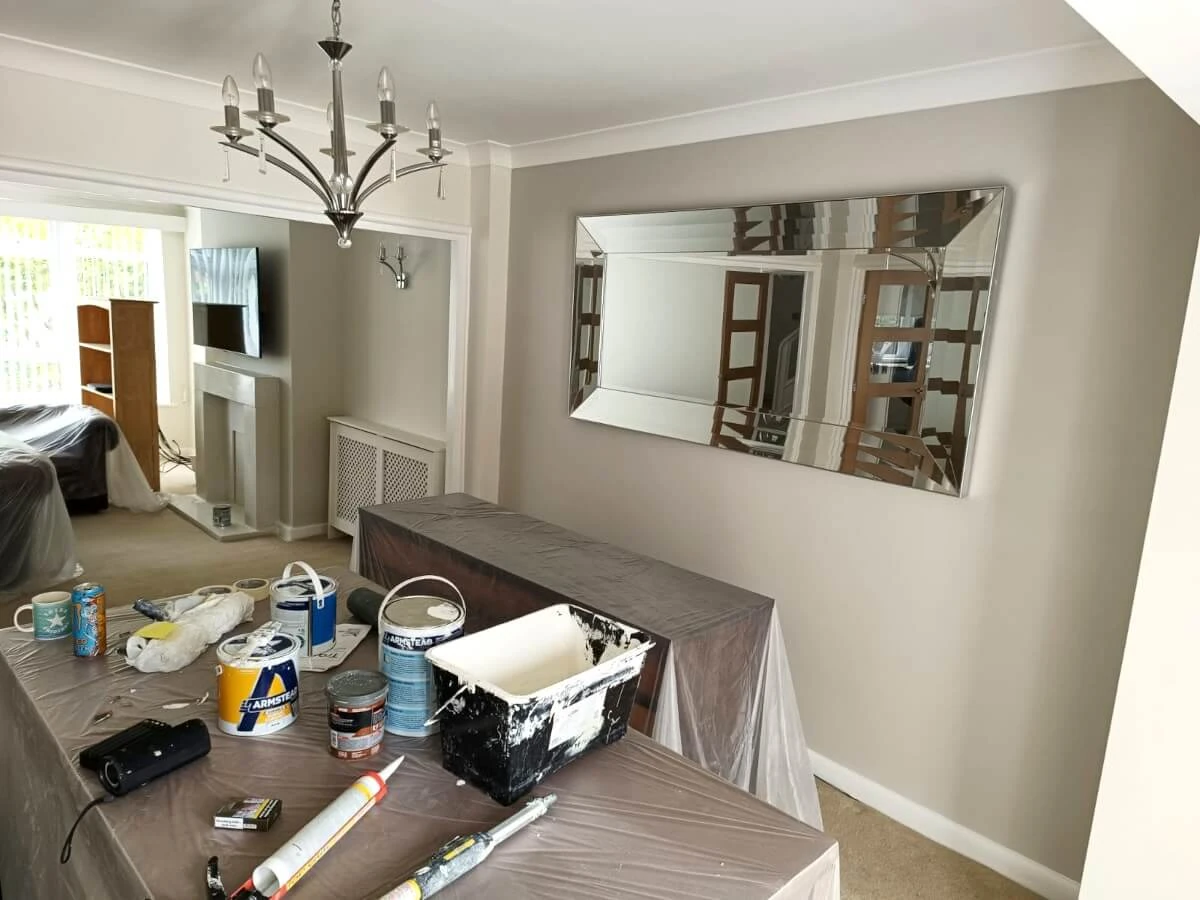
A camera is much less forgiving than a room. Scuffed walls, yellowed woodwork and dark ceilings go unnoticed in person. They stand out the moment they’re lit and photographed for a listing.
Four things read badly on camera, in order of how often they show up.
- Scuffed and marked walls. Every scuff catches the light differently from the wall around it. A wide-angle listing photo makes that difference obvious.
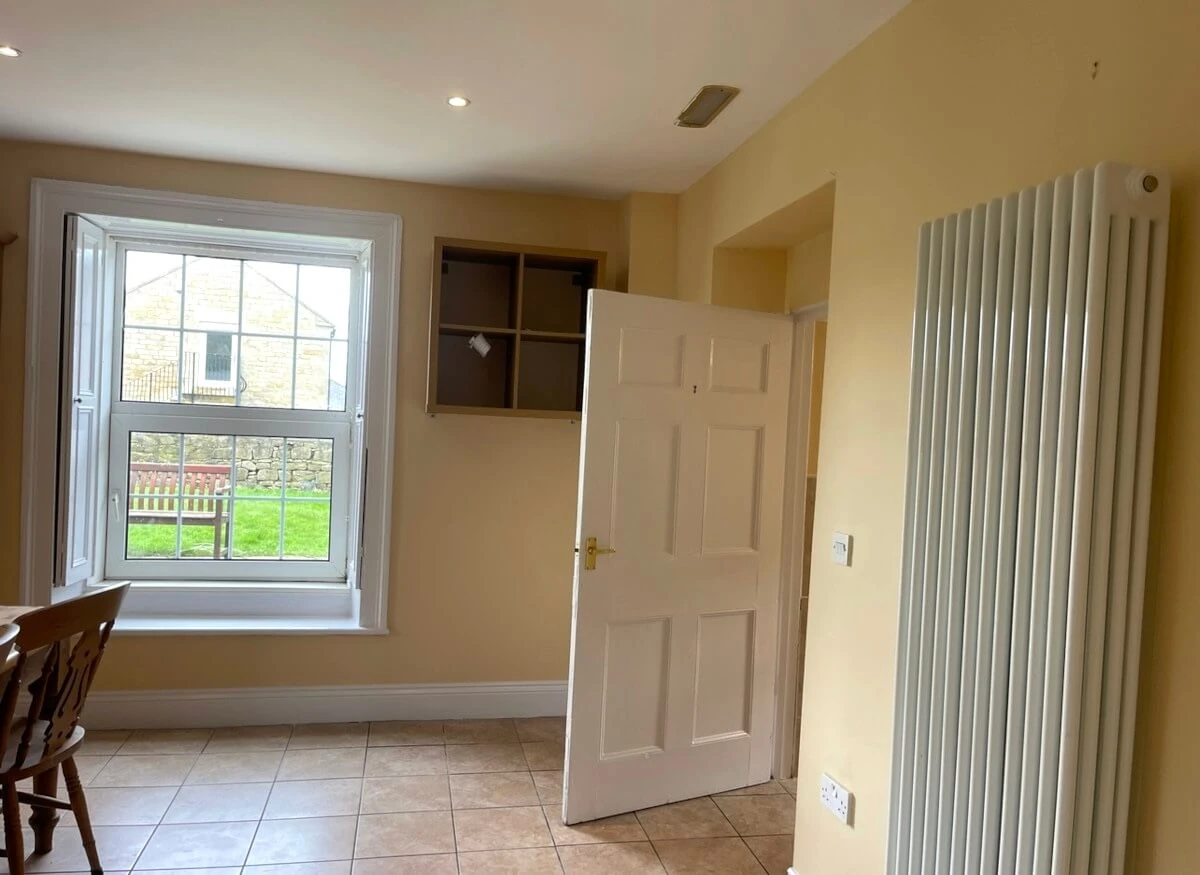
- Yellowed woodwork. Gloss and satin paint yellow over years, especially near radiators. It reads as dated even in a room that’s otherwise in good condition.
- A strong or dated colour. A colour that suited your own taste can put off a buyer picturing their own furniture in the room. It also photographs less true to life than a neutral wall does.
- Dark ceilings. A ceiling that isn’t bright white eats the light a listing photo depends on. It also makes a room look smaller than it is.
None of those four is about valuation. They’re about whether a buyer clicks past your listing, or stops to look properly.
So where should you spend the money, once you know what matters?
⚡ What Is the Cheapest Work With the Biggest Effect?
Once the photographs are the priority, the spend order gets a lot clearer. This is the general order most decorators follow, cheapest and highest-impact first.
- Ceilings. A bright white ceiling lifts every photo taken in the room underneath it. It’s one of the smallest jobs on this list. See our page on ceiling painting.
- Hallway, stairs and landing. The first thing every viewer sees, in person and in the listing’s lead photo. See our page on hallway painting.
- The main reception room. Whichever room the listing’s second photo shows, usually the living room. It carries more weight in a buyer’s first impression than any bedroom.
- Woodwork. Skirting boards, door frames and architraves. Yellowed or chipped woodwork reads as neglect even when the walls themselves are fine.
- The front door. The first photo in almost every listing. Often the only exterior shot a buyer sees before deciding whether to click through.
- Colour, last. Once you’ve done the above, a dated or clashing colour is worth addressing. It rarely tops the list on its own.
Every one of those items reads differently on your house than on the page. A decorator who has seen the rooms can tell you in five minutes which ones apply.
Get My Free Quote
Ask us what your own photographs actually need.
What Is Not Worth Doing Before a Sale?
Naming what to skip is worth more than another item to add to the list. Six things rarely earn back what they cost, this close to a sale.
- A full redecoration of every room, when only the rooms in the listing photos need it.
- New wallpaper, which is a taste decision for whoever buys the house, not for the listing.
- A new kitchen or bathroom suite. Repainting cabinets and walls gets most of the visual lift for a fraction of the cost. See our page on kitchen cabinet painting.
- New flooring throughout the house, unless the existing floor is damaged.
- Garden landscaping beyond a basic tidy. A buyer values the house, not the planting scheme.
- Structural repairs beyond whatever a mortgage valuation would flag as necessary.
None of that means ignore a genuine problem. A survey or valuation flags anything that needs fixing before a sale. This list is about optional spend that photographs don’t reward.
So what colour, if any, is worth changing?
Neutral Does Not Mean Magnolia
Neutral means a colour that does not make a decision for the viewer. It’s a judgement about light and the room’s own orientation, not one single ‘safe’ colour used everywhere.
Magnolia is one neutral option among several, not the default. A soft grey, a warm white or a pale greige often photographs better. It depends on which way the room faces and how much natural light it gets.
Brilliant white everywhere photographs badly too. It can look flat and clinical under a camera flash. It also shows every mark and shadow a softer white would hide.
The right neutral for a north-facing room is rarely the right one for a south-facing one. That’s a judgement worth making room by room, not a single tin bought for the whole house.
How Long Do You Need Before the Photographs?
Work backwards from the photography date, not the listing date. The photographer often comes before the listing goes live. That’s the date that matters for your schedule.
As a general guide, one decorator gets through around one average room a day. A hallway, stairs and one or two reception rooms are the highest-impact items from the spend-order list. They typically run three to five working days.
Add drying time on top before you style the rooms for the shoot. A couple of days lets the smell clear and lets you move furniture back without marking a fresh coat.
Book with a few days of slack either side of your target date. A photography date that moves, even by a day or two, is easier to absorb with that slack built in.
Decorating Before Selling FAQs
Get My Free Quote
Fill in the form below for a free quote: