
Mist Coat Ratio: What to Mix, and What to Avoid
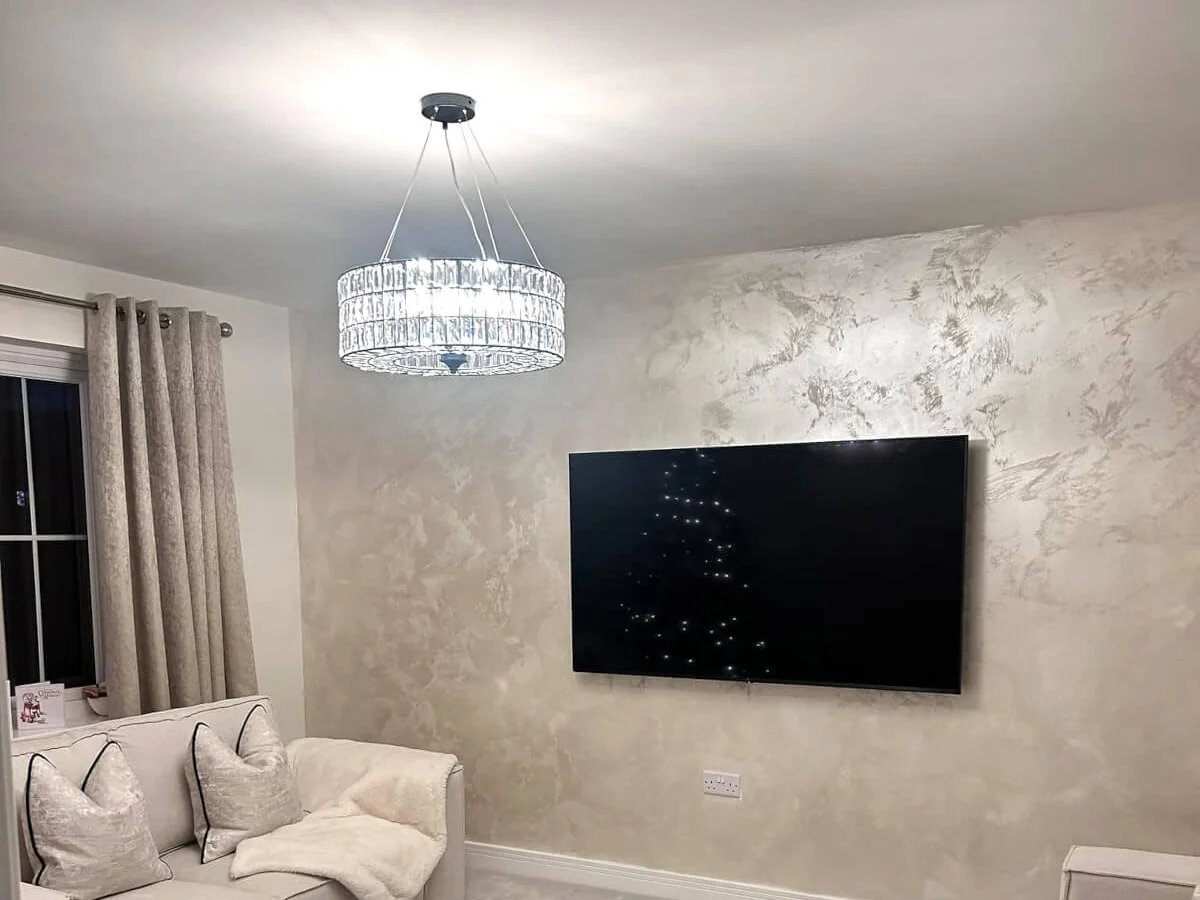
Painting new plaster and not sure what the first coat needs?
This guide shows you how to check the product, test the wall and apply the first coat safely.
The product instructions come first. Paints vary, and some should not be thinned.
Call 0191 743 3614 if you’d rather hand the new-plaster work to a decorator instead.
What’s the Right Mist Coat Ratio?
There is no universal mist-coat ratio. Check the exact paint instructions first. Products differ, and some must not be thinned.
If the label permits thinning, stay within its range and test a small area before covering the room. Stop if the coat beads, runs heavily or fails to bond.
| Check | What to do |
|---|---|
| Exact product | Use its stated new-plaster preparation |
| Wall condition | Confirm the plaster is fully dry |
| Test area | Check coverage and adhesion before continuing |
The test should behave as the product guidance describes. If it does not, ask the manufacturer or a decorator before painting the full wall.
Which Paint Should You Use — and Which to Avoid Thinning?
Not every paint on the shelf wants to be thinned this way.
Read the label or technical sheet for the exact paint. Some standard matt emulsions allow a thinned first coat. Other products are made for direct application or need a separate primer.
Thinning a product that is not designed for it can change how it cures or bonds to the surface. If the instructions do not mention thinning, do not guess.
The same caution applies to most modern breathable emulsions marketed for period walls. They’re built around a specific formula, and watering one down can undo the exact property you bought it for.
Why Does New Plaster Need a Mist Coat at All?
New plaster is porous, and it’s never been painted before. It pulls moisture out of the first coat unevenly. Some patches absorb more than others, depending on how the plaster dried.
A full-strength coat straight onto that surface dries patchy. Some areas turn out flat. Others stay slightly shiny, because the wall soaked up the paint’s binder at different rates.
The thinned mist coat seals the surface first. Water evaporates fast, and there isn’t enough binder in it to leave an uneven film behind. Once it’s dry, the wall drinks paint at a much more even rate.
Let it dry fully before recoating. Check the tin for touch-dry and recoat times. These vary between products, and with how well-ventilated the room is.
This is usually the stage where fresh plaster from a re-plaster or an extension first meets a paintbrush. If the plastering itself still needs finishing, that’s a separate job — see our page on plastering services.
Get My Free Quote
Unsure if your plaster’s ready? We’ll check it.
⚡ How to Apply a Mist Coat Without Patches or Runs
Once the product instructions are settled, application still needs care. Work evenly and check the test area before covering the wall.
- Cut in first. Do the edges — the ceiling line, corners, sockets and skirting — with a brush before the roller touches the wall. That gives you a clean line to roll up to.
- Work in manageable sections. One wall, or about a metre and a half at a time, rather than the whole room before moving on. Thinned paint dries faster than full strength. A section that’s too big starts drying at one end before you’ve finished the other.
- Don’t overload the roller. Thinned paint runs more readily than full strength. Load the roller, then run it out on the tray before it goes near the wall. A dripping roller on porous plaster is how runs happen.
- Keep a wet edge. Roll into the wet edge of the section before it, not over one that’s already started to dry. A dry-to-wet join leaves the faint stripe a full-strength top coat won’t fully hide later.
- Watch the sheen as it goes on. New plaster shows wet patches darker than dry ones while you’re working. That’s normal. It’s how the wall looks once fully dry that tells you whether the coverage was even.
Follow the product’s coverage and recoat guidance after the first coat. Rushing the section size or roller loading can still leave patches that need correcting.
Get My Free Quote
Getting this wrong on a whole wall is expensive to put right. If you’d rather it was done properly the first time, we cover new-plaster jobs across Newcastle upon Tyne.
Common Mist Coat Mistakes
Three mistakes account for most patchy mist coats. All three are easy to avoid once you know what to look for.
Mistake one
Mixed Too Thick
Not enough water leaves a mist coat that behaves like a full-strength coat. It dries with visible sheen differences instead of sealing the plaster evenly, which defeats the point of thinning it at all.
Mistake two
Mixed Too Thin
Too much water and the mix doesn’t carry enough paint to seal the surface. The wall still drinks the next coat unevenly, so you end up doing the sealing job twice.
Mistake three
Skipped on Patch Repairs
A wall that’s mostly old paint with one freshly skimmed patch still needs a mist coat on that patch. Skip it, and that one area dries a different sheen to everything around it.
How Many Coats Come After the Mist Coat?
The mist coat is never the last coat. It’s preparation, not finish. Once it’s fully dry, the wall’s ready for the actual colour.
Many systems need two finish coats after the suitable first coat. Follow the exact product’s coverage guidance.
A strong colour change usually needs a third full-strength coat to cover evenly. Going dark over the mist coat, or choosing a saturated colour like navy, is the most common reason. New plaster doesn’t get a shortcut just because it’s fresh.
Budget drying time between every coat, not only after the mist coat. Rushing a recoat before the layer underneath is properly dry is a common cause of patchiness. Even a correct ratio can’t fix that.
Decorating a whole newly plastered room rather than one wall? Our page on whole house decorating in Newcastle upon Tyne covers cost and timing for the rest of the job.
A Note on the Ratio Above
The right first coat depends on the exact paint and the condition of the plaster. This page does not substitute a generic ratio for the product instructions.
Want the wall checked before work starts? Get in touch and a decorator can assess the plaster and chosen paint.
Mist Coat FAQs
Get My Free Quote
Fill in the form below for a free quote: