Victorian, Edwardian & listed homes
Period Property Painting in Newcastle
Are you planning to paint a Victorian, Edwardian or listed home in Newcastle?
Tulip Decor connects you with a decorator who knows period homes. This page answers the five questions owners ask first:
- How old is my house, and does it matter?
- Do I need permission to paint it?
- What is on my walls, and what paint should go on them?
- How do I repaint sash windows and original detail?
- Is there lead paint in my house?
Call 0191 743 3614 and talk through what your period property needs.
How it works
How Tulip Decor Works
Tulip Decor connects Newcastle upon Tyne homeowners with a trusted local decorator. Tell us about the job and we’ll match you with the right decorator for your area — one we know and rate. From the first site visit to the written quote, the work happens between you and your decorator. We make the introduction and stay on hand. They do the work and stand behind it.
Why Tulip Decor
Why Choose Tulip Decor
Period Specialists
Your decorator works with lime plaster, distemper and original joinery, and knows how each one behaves.
Clear Pricing
One fixed price from the first quote. No surprise additions later.
Fully Insured
Full public liability cover, held by your decorator, on every job.
Highly Recommended
Most jobs come from repeat clients and referrals.
Your house’s age
How Old Is Your Victorian or Edwardian House?
Work out the age first. It tells you which materials and colours suit the house.
“Victorian” covers roughly 1837 to 1901, and the houses changed a lot across those years. Edwardian houses came next.
| Period | Roughly | What you tend to see |
|---|---|---|
| Early Victorian | Up to about 1860 | Simpler facades, larger window panes, plainer plasterwork |
| Mid-Victorian | About 1860 to 1880 | More decoration: patterned brickwork, bay windows, heavier cornicing |
| Late Victorian | 1880 to 1901 | Arts and Crafts influence: tiled porches, stained glass, more elaborate joinery |
| Edwardian | 1901 to 1910 | Wider hallways and more natural light, with simpler, less ornate detailing |
A few clues narrow it down. Ceiling height often drops slightly in later houses. Skirting boards and architraves tend to get simpler. Fireplace surrounds shift from marble and slate to tiled inserts.
You don’t need a professional survey. A look at the details already in your rooms usually tells you enough to decorate well. The build date on your survey or deeds settles it for certain.
Permission & conservation areas
Do You Need Permission to Paint Your House in a Conservation Area?
Being in a conservation area affects some decisions more than others.
Interior colour choice is usually unrestricted, whatever your building’s status.
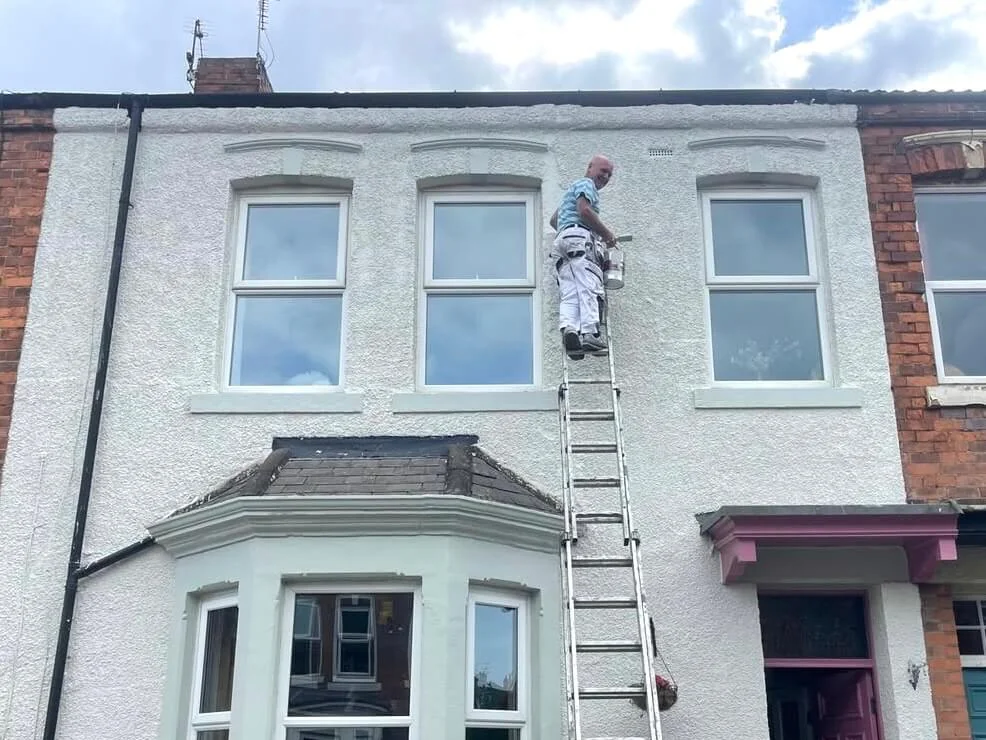
Exterior changes are different. Repainting render or changing an exterior colour can need council approval.
Listed building status is stricter again. It can restrict colours, finishes and materials, sometimes inside as well as outside.
Jesmond and parts of Gosforth are conservation areas. Newcastle also has several listed period properties.
Check with the council’s conservation team before you commit to an exterior colour or finish. It saves you repainting something you didn’t need to.
Your decorator will have worked on properties with listed building restrictions before. Most owners meet the same pattern: interior largely unrestricted, exterior needing approval.
Before you paint
What Is on Your Old Walls Before You Paint Them?
Most failed paint jobs in old houses come from painting over something you didn’t know was there. Check three things first.
What is on the wall now
Scratch the surface with a fingernail or a tool. Distemper chalks and rubs off. Modern emulsion stays hard. Your decorator runs these tests at the site visit.
The result matters. Emulsion painted over distemper peels within weeks, because the chalky surface stops paint from bonding. Distemper has to be identified and treated before any emulsion goes on. It’s the most common failure in Newcastle period homes.
The plaster matters too. Lime plaster, generally pre-1940s, is softer, more porous and breathes. Gypsum plaster, generally post-1940s, is harder and less absorbent. Lime plaster needs a mist coat and breathable finishes. Gypsum takes modern paint more easily.
Bare lime plaster is porous and absorbs paint unevenly. A dilute first coat, a mist coat, seals the surface and evens out the topcoat. This is standard practice, not an optional extra.
Cracks
A hairline crack in an older wall often still moves slightly with the seasons. Rigid filler in a joint that moves just cracks again. Ask your decorator to check whether the crack is still moving before it’s filled.
Damp
A fresh coat over a damp patch hides the symptom and leaves the source. The damp usually comes back within a season. Find and fix the cause first.
Damp and salts in the plaster also make non-breathable paint fail faster. Damp and salt-stained plaster gets addressed before anything is painted over it.
Paint & materials
What Paint Does an Old Newcastle House Need?
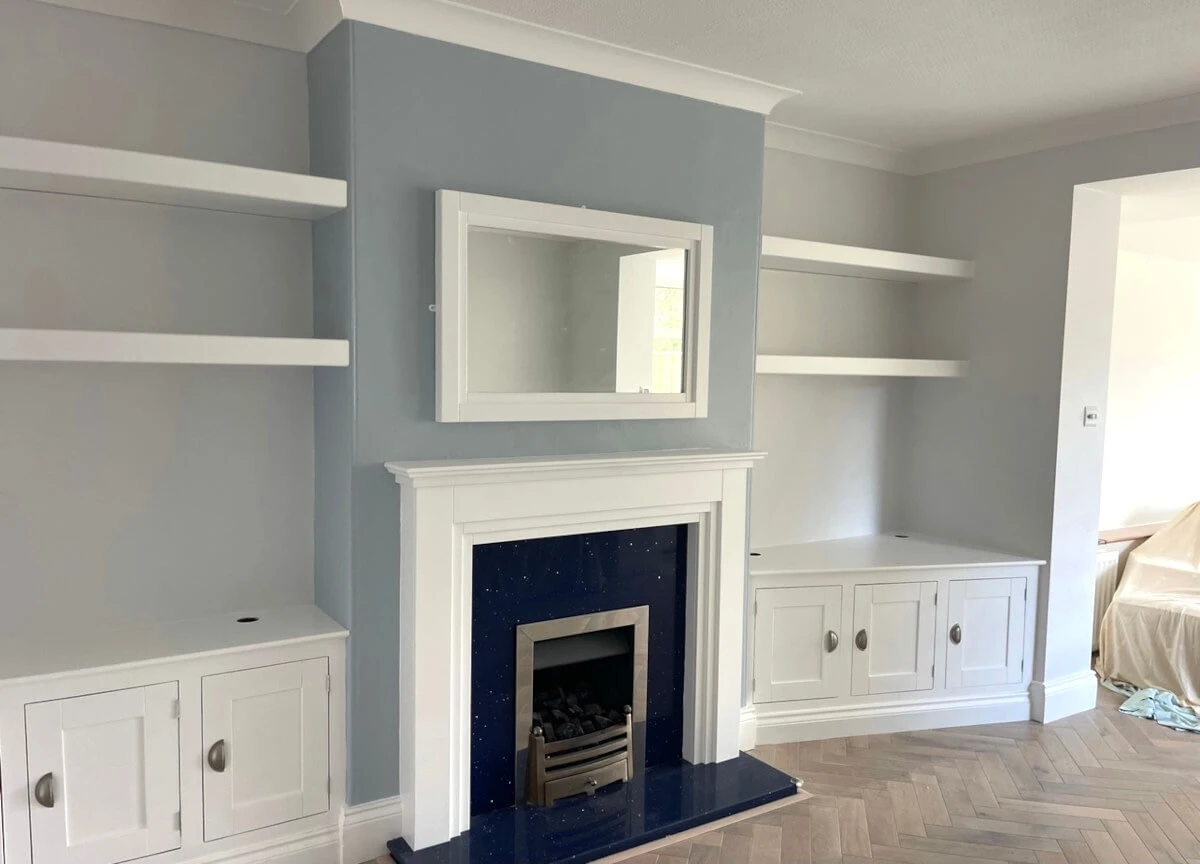
Old walls need to breathe.
Most Victorian walls are solid brick or lime render, built without a cavity. Lime render and lath-and-plaster let moisture pass through the wall instead of trapping it.
Seal one of these walls with standard modern plastic paint and the moisture has nowhere to go. It usually shows up later as damp, bubbling, or a paint film that won’t stay put. Sometimes it takes years to appear.
Look for paint described as vapour-permeable, breathable or lime-based. The right product for the surface matters more than colour or brand.
| Surface | Suits | Note |
|---|---|---|
| Solid external walls in good condition | Breathable masonry paint | Lets moisture out while still protecting from weather |
| Lime render or lime plaster | Limewash | More porous again, and needs reapplying more often |
| Original joinery: doors, sashes, external woodwork | Linseed oil paint | Flexes with the timber instead of cracking over it |
| Lime plaster or lime render | Avoid modern plastic emulsion and cement render | Both seal the surface in a way lime was never built to handle |
Heritage ranges like Farrow & Ball, Little Greene and Fired Earth research period colours. Your decorator will talk through colour and the right system at the site visit.
A later cavity-wall extension doesn’t carry the same restriction, so your decorator treats it separately from the original house.
Sound existing paint or render doesn’t always need stripping. Check its condition first. Pebbledash or render that is sound, and was painted before with a compatible product, can usually be painted again. A breathable product is the safer choice on an older solid wall.
When to paint the outside
Spring and early autumn are usually best: dry and mild, without summer heat or winter cold. Avoid strong direct sun, which dries the surface before the paint has bonded underneath. Avoid damp and freezing conditions too. Damp traps moisture under the paint, and cold slows curing right down.
Check the forecast a few days ahead. Rain within a day of painting can mark a coat that hasn’t cured. Breathable paints often need longer to cure, so follow the drying times on the tin.
How long it lasts
Exterior masonry paint typically lasts five to ten years, depending on the product, aspect and weather. Limewash needs reapplying more often, usually every few years.
Get My Free Quote
Tell us about your walls and we’ll arrange advice on the right paint system before any work starts.
Sash windows
How Do You Repaint Sash Windows Without Painting Them Shut?
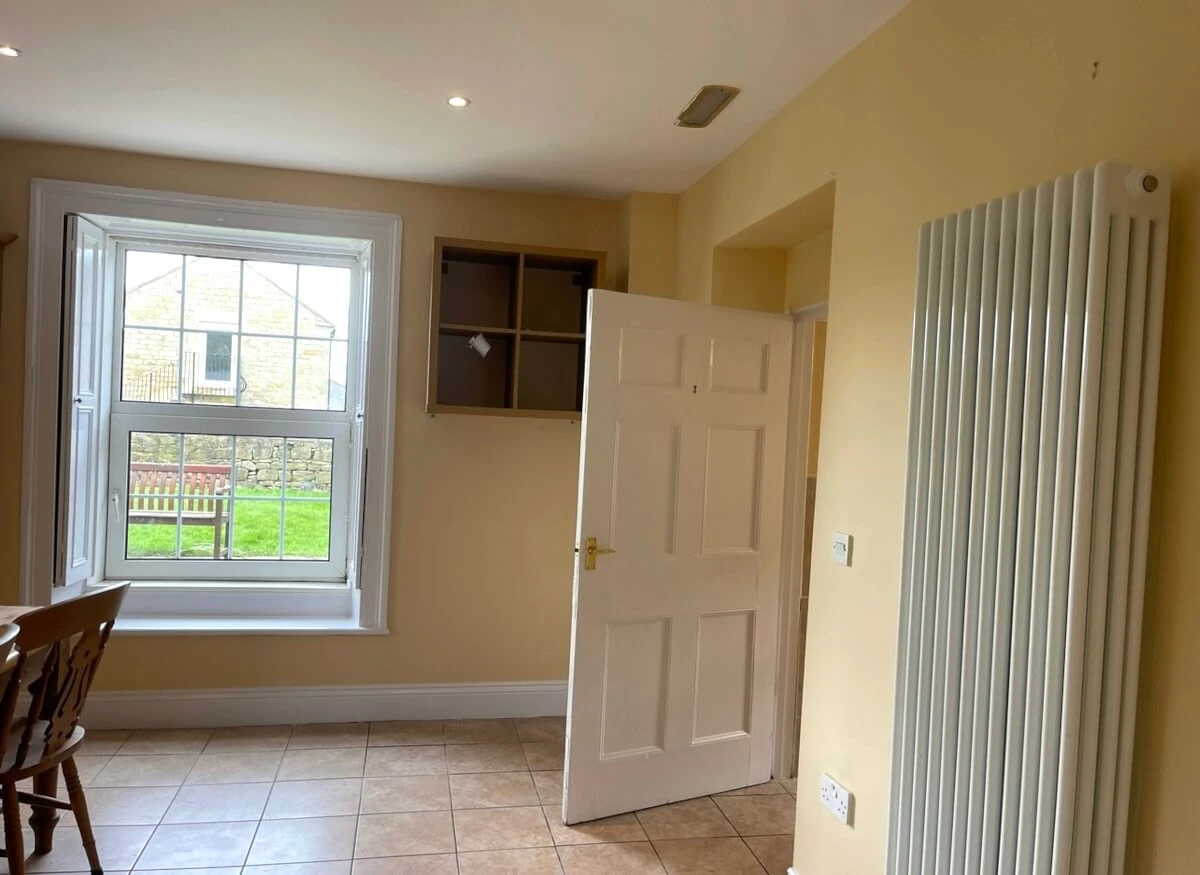
Sash windows fail for a mechanical reason, not a mysterious one.
Paint bridges the gap between the sash and its running channel. Once that gap fills with paint, the window can’t slide.
Your decorator masks the running channels and parting beads before painting, not just the visible face of the frame. That keeps the sash moving freely once the paint is dry.
Sash cords and pulleys get left alone too. Paint on the mechanism turns a stiff window into one that won’t move at all.
Give a repainted sash time to dry fully before anyone tries to open it. Rushing that step is the other common cause of a stuck window.
A stuck sash is almost always a paint problem in the running channel, not a fault with the window itself. That’s why original sashes are usually worth repairing instead of replacing.
For the surrounding frame, see our window frame painting page.
Original detail
What’s Involved in Restoring Painted Cornice, Spindles and Original Joinery?
Ornate detail is easy to lose without meaning to.
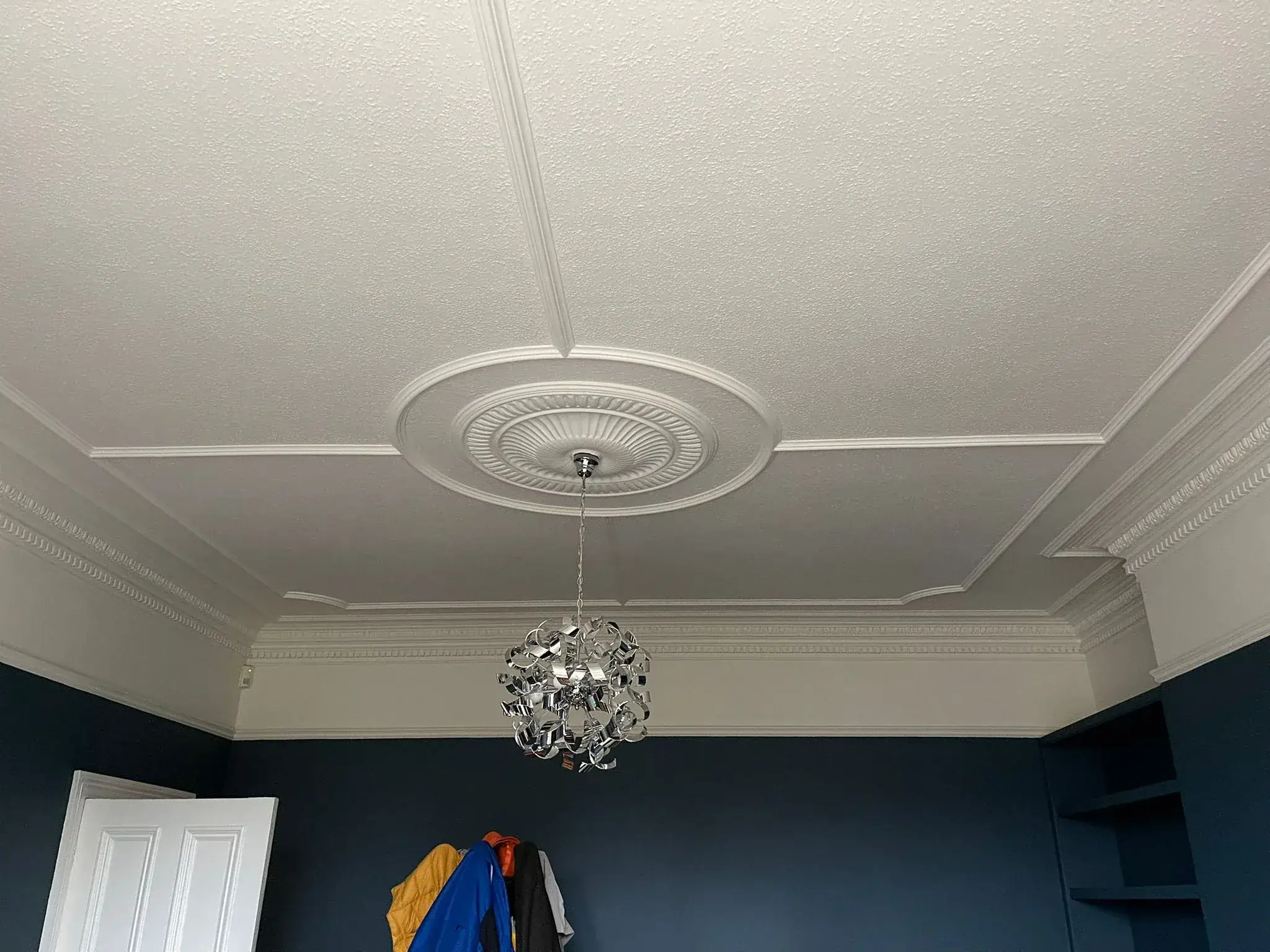
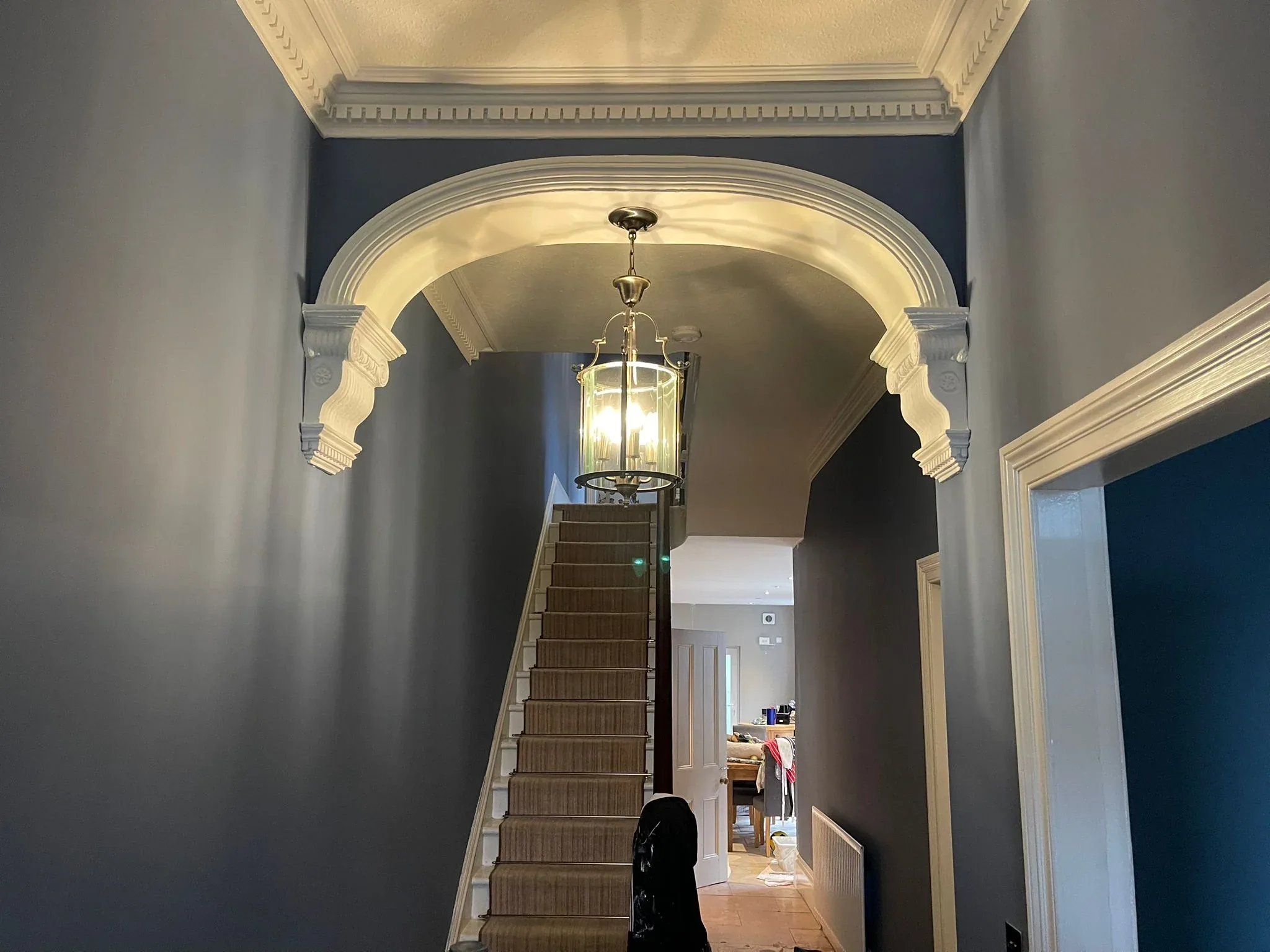
Panelled doors, picture rails, deep skirting boards, cornicing and ceiling roses are often original to the house. Once they are stripped out, they’re gone for good.
Layers of old paint often bury the crispness of a cornice, a door panel or a staircase spindle. Stripping too aggressively can take the detail with it.
Your decorator looks at each piece before deciding how to treat it. Where the detail is still sharp under the paint, a careful clean and a fresh coat is usually enough. Where it’s buried under years of build-up, paint comes off in stages so the moulding underneath isn’t damaged.
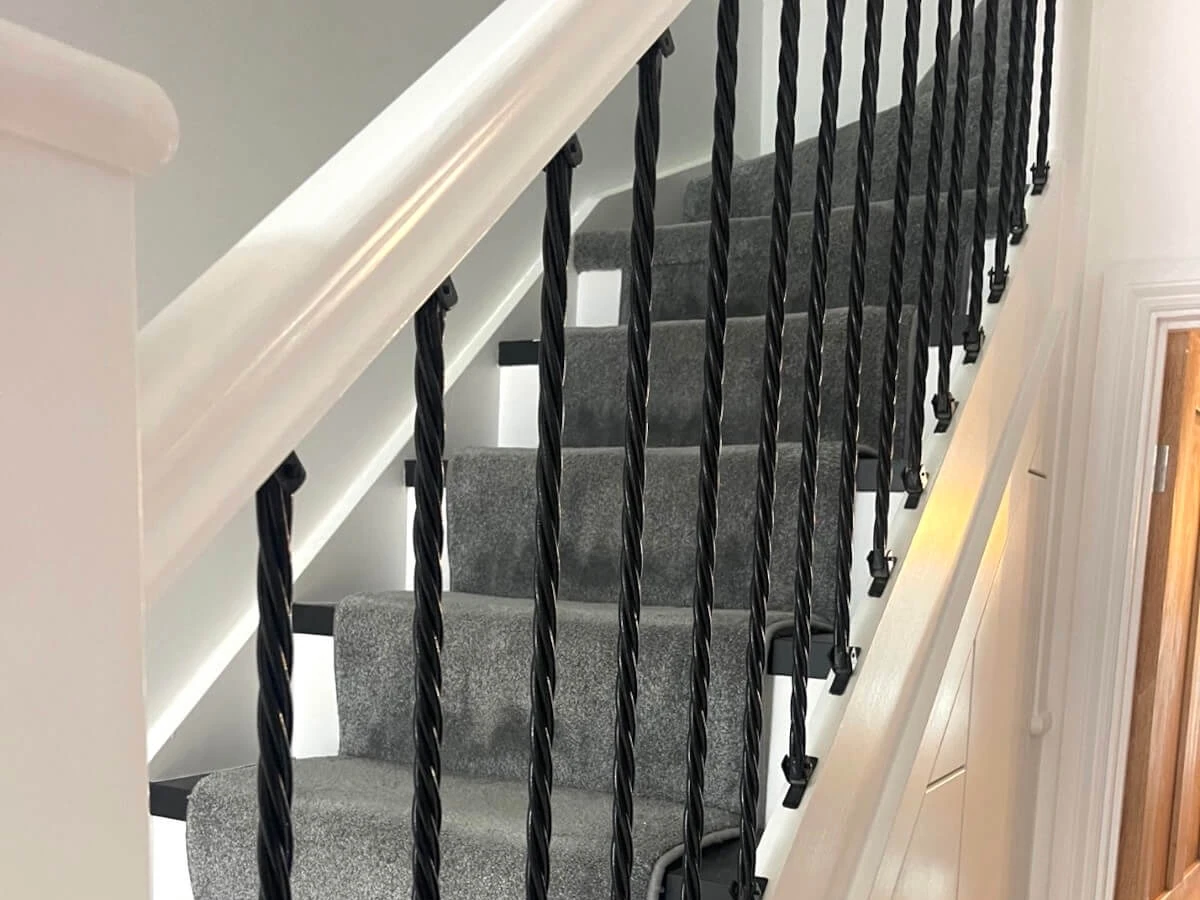
Decorative plaster cornice and coving follow the same rule. Staircases too: check the detail before deciding how much paint to remove.
Original wood is repainted, in most cases, if the existing paint is sound. Full stripping risks losing moulded detail. It’s usually only worth it where paint has built up so thick it hides the original profile.
For the woodwork itself, our wood painting page covers restoration in more detail.
Get My Free Quote
Tell us what detail your house has and we’ll arrange a decorator to assess it before anything is stripped.
Lead paint
Can You Paint Over Lead Paint in a Pre-1970s House?
Many pre-1970s properties have older layers of paint that contain lead.
Lead paint was in common use across the UK until the mid-20th century, and wasn’t banned for general sale until 1992.
On its own, sound lead paint under a top coat isn’t usually a hazard. The risk comes from disturbing it. Sanding, scraping or stripping releases dust and paint chips into the air.
That risk matters most for children and pregnant women. Both are more vulnerable to lead exposure than anyone else in the house.
If a pre-1970s surface needs prep, avoid dry-sanding until you know what’s underneath. Wet-sanding, chemical stripping or a sound top coat all cut the amount of dust released.
A confirmed positive test is a job for a specialist in lead paint removal, not standard redecorating.
The safe approach stays the same whoever’s decorating: treat any pre-1970s paint as if it might contain lead, until a test proves otherwise.
The process
Here’s How It Works
1. Survey and Testing
Your decorator examines all surfaces and tests for distemper, limewash and previous coating types at the first site visit.
2. Distemper Removal
Where distemper’s present, your decorator treats it with a stabilising wash or removes it carefully, depending on extent and condition.
3. Plaster Assessment and Repair
Damp, cracking or salt-stained plaster gets addressed first. Bare lime plaster receives a stabilising primer.
4. Mist Coat Application
Lime plaster receives a dilute mist coat before any finish coats go on.
5. Finish Coatings
Final colour coats go on last. Woodwork is stripped, primed and finished separately where needed.
Costs
What Does It Cost to Redecorate a Victorian Terrace in Newcastle?
No two period properties cost the same to redecorate. Three real Newcastle jobs below show the range.
Full Interior — Four-Bedroom Period Terrace, Jesmond
Survey, distemper removal, mist coats, modern emulsion throughout, woodwork stripped and eggshell: £4,500 to £7,500. High ceilings and large rooms increase wall area and preparation time.
Two-Bedroom Flat with Listed Building Restrictions
Conservation-compliant colour selection and specialist finishes: £2,800 to £4,200. Listed building requirements are factored into the quote from the outset.
Five-Bedroom Period Detached, Ponteland
Extensive prep, premium heritage finishes throughout: £6,500 to £10,000+. Timeline depends on plaster condition and drying time between coats.
What Drives the Price
Three factors set the cost: house size and room count, surface condition, and finish specification. Distemper removal and damp repair both add cost. Heritage paint systems and Farrow & Ball specifications cost more than standard emulsion.
Get My Free Quote
Tell us about your house and we’ll arrange a quote with one fixed price.
Answers
Painting a Victorian, Edwardian or Listed House: Your Questions Answered
Get My Free Quote
Fill in the form below for a free quote: