
Painting New Plaster: How Long to Wait, and How to Tell It’s Ready
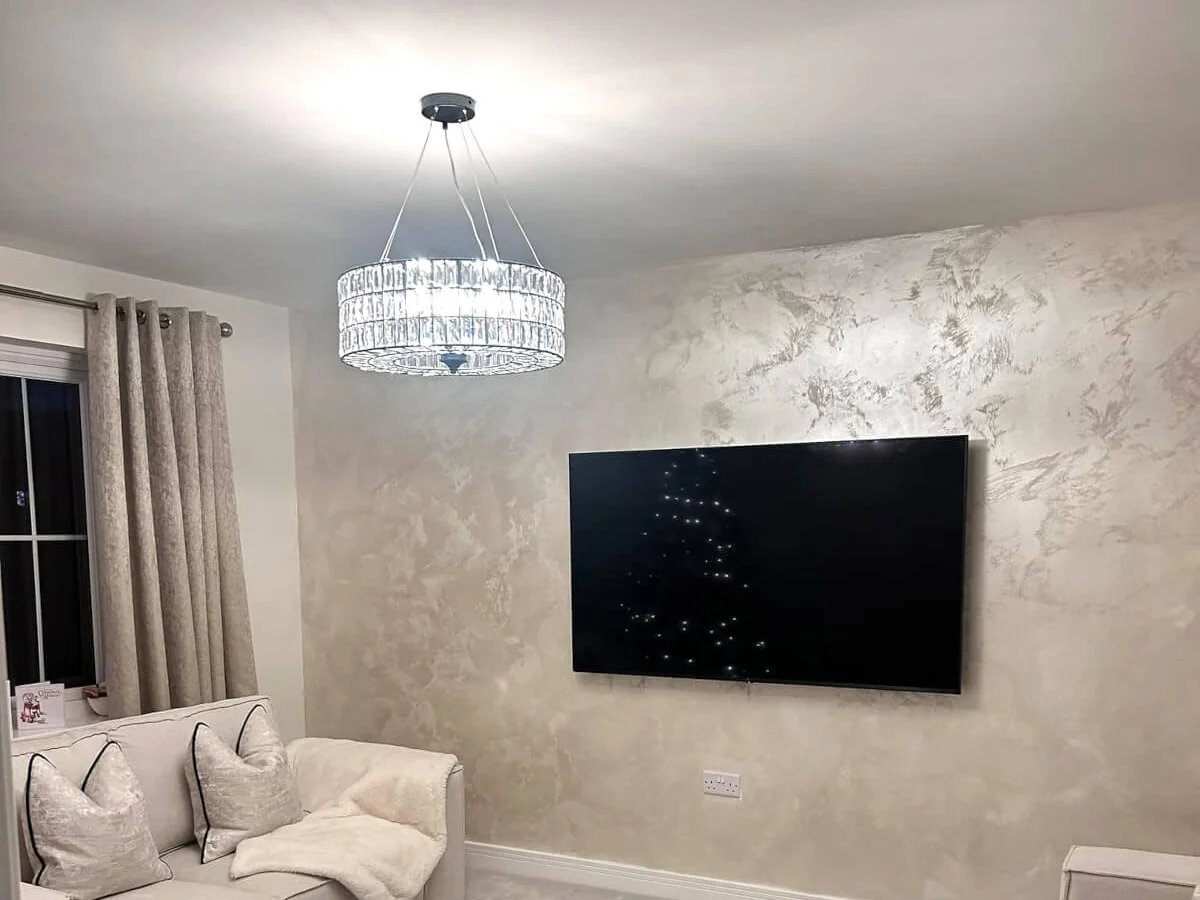
Just had a wall or ceiling plastered, and wondering when you can get the paint on?
Here’s the test to run yourself, what decides how long it takes, and what happens if you rush it.
Call 0191 743 3614 if you’d rather send Ross a photo than run the test yourself.
Is Your Plaster Dry Enough to Paint?
Colour, not the calendar, is the real test. Wet plaster looks darker and patchy in tone. Dry plaster looks pale, matt and even across the whole surface, with no darker patches left in the corners.
Press a knuckle against it, low down and in a corner where it dries slowest. Dry plaster feels cool for a second and warms up fast. Damp plaster stays cool and faintly clammy.
As a generic range, allow roughly a week per coat of skim in normal conditions. That’s a starting point to plan around, not a number to paint against blind.
- The colour has evened out across the whole wall or ceiling, corners included
- It feels dry and warm to the touch, not cool or clammy
- No dark patches remain, especially low down or in the corners, where damp lingers longest
All three need to hold true, not just one of them.
Ceilings follow the same test as walls. See our ceiling painting page if that’s the surface you’re waiting on.
What Drives How Long It Takes to Dry?
Two identical rooms can dry at very different speeds. Four things usually explain the gap.
- Room size and ventilation. A small, sealed room holds moisture in the air longer than one with a window cracked open or a through-draught.
- The weather. Cold, damp weeks slow everything down. A warm, dry spell speeds it up.
- Heating. Gentle background warmth helps. Blasting the heating does not, and can dry the surface faster than the plaster underneath it.
- How many coats of plaster went on. A single skim over sound plasterboard dries faster than a full two-coat render on brick or block.
Any one of those can add days on its own. Together, they’re why one room’s ready before another in the same house.
What Happens If You Paint Too Soon?
The paint film doesn’t fail straight away. It goes on looking fine, then the problems show up over the following days.
New plaster is still giving off moisture while it cures. Paint on top seals that moisture in rather than letting it out.
Trapped moisture pushes back against the paint film from underneath. That shows up as bubbling, a patch that stays soft to the touch, or a stain bleeding through the new coat.
None of it is fixed by another coat on top. The wall usually needs stripping back and starting again, once it’s properly dry.
That makes rushing it a false economy. A week’s wait costs nothing. A repaint costs the job twice over, in time and in materials.
If you’re not sure whether your own wall’s ready, send Ross a photo before you open a tin. Tulip Decor handles new-plaster jobs across Newcastle upon Tyne.
Get My Free Quote
Send a photo of your wall, and get a straight answer on whether it’s ready.
A Skimmed Patch vs a Full New Wall: Different Rules
A patch and a full re-skim don’t dry at the same pace, and treating them the same is the most common mistake on this question.
A small skimmed patch — over a chased-in cable, a removed socket, a repaired crack — dries faster than a full wall. Less plaster, less moisture, less time.
A full new wall or ceiling holds far more moisture across a much bigger area, and takes noticeably longer to dry through.
Where the two meet on one wall, treat the whole thing as slow as its slowest patch. Painting around a still-damp patch and coming back for it later usually leaves a visible join in the finish.
What About the Mist Coat?
New plaster is thirsty. Paint straight from the tin won’t take evenly across it.
A mist coat is a first coat of emulsion, thinned with water. It seals the surface, so the coats after it sit flat rather than soaking in patches.
For the mix and how thin to go, see our full guide on the mist coat ratio. Bare plasterboard left exposed by the job follows the same rule. See our plasterboard painting page for that surface.
How to Dry a Room Out Safely
The instinct is to blast the heating and shut the door. That’s usually the wrong move.
Gentle airflow beats direct heat. A window cracked open, or a fan moving air across the wall rather than pointed straight at it, dries plaster evenly.
Keep the heat steady, not high. A blast of direct heat dries the surface fast while the plaster underneath stays damp. That’s the pattern that leads to cracking.
Go easy on a dehumidifier. One on a low or medium setting in a ventilated room helps. Left running flat out in a sealed-up room, it can pull moisture out of the surface faster than the plaster underneath can give it up.
Don’t seal the room up completely. Plaster needs somewhere for the moisture to go. A closed room with no airflow at all just holds it in the air instead.
Get the drying wrong and cracking or an uneven finish is the usual result, on top of the wait itself.
Or skip the guesswork and send a photo instead. Ross covers the decorating once your walls are ready.
Get My Free Quote
Ross will tell you plainly when your walls are ready.
Painting New Plaster After an Extension
Everything on this page applies whether the new plaster is one patched wall or a whole extension.
On an extension specifically, the wait usually isn’t the only question. There’s also the crack where the new build meets the old house, and the running order against the other trades.
Our guide on decorating after an extension covers both, alongside what drives the cost.
The same drying rules apply to a new build too.
Our new build decorating in Newcastle guide covers the wider timing and warranty picture.
Painting New Plaster FAQs
Get My Free Quote
Fill in the form below for a free quote: